Behaviour
We are committed to maintaining the highest standards of behaviour, ensuring every child can learn in a safe, respectful and focused environment.



We are committed to maintaining the highest standards of behaviour, ensuring every child can learn in a safe, respectful and focused environment.
We have high expectations of all our children, from the outset we expect them to behave in a polite, respectful manner. Children are rewarded for good behaviour as part of our weekly celebration assemblies. We use a sanctions system to ensure that children are kept safe and know when their behaviour is inappropriate.
When an incident does occur we aim to report it to parents within the day and will work in cooperation with parents to identify the reasons for the inappropriate behaviour and plan positively to help your child achieve their goals and improve their behaviour.
The Head Teacher, all members of staff and our trust are responsible for promoting good behaviour at Lift Lea Forest.
We regard good behaviour as a highly important aspect of children's education and development that they learn to behave well towards others and towards the community in which they live. Good behaviour underpins effective learning, and children need good personal and social skills in order to live fulfilling and rewarding lives as adults.
Lift Lea Forest is a Restorative Justice school.
Academy Aims are linked to our School Values:
· Independence - To promote self – discipline in all areas of behaviour.
· Respect - To encourage good behaviour, individual respect and tolerance of all.
· High Aspirations - To ensure children’s standard of behaviour is exemplary and does not disrupt the learning of others and enables them to achieve their full potential.
· Innovative - To promote a high standard of behaviour within the school, and wider community, by promoting a restorative approach in all aspects of school life.
· Resilience - For all stakeholders to take part in, and learn from, restorative approaches.
The school values are displayed around our school to be accessible to the very youngest of our pupils. These are intrinsic in all aspects of school life.
Behaviour Management
Classroom behaviour management may include:
· Targeting specific behaviour using dojos
· Modelling and naming the values of Lift Lea Forest
· Early intervention to identify any underlying causes of inappropriate behaviour
· Involvement of parents
· Work with outside agencies – COBS, PSS, EP and others as appropriate
· Staff development – relevant professionals to support with advice and / or signpost to available courses
· ‘Team-teach’ de-escalation techniques
Rewards
We praise and reward children with good behaviour in a variety of ways:
· Dojos - an electronic reward system used across the school. Pupils may be instantly rewarded with ‘dojos’ by members of staff. Parents will be able to log into their child’s account to see if they have received any dojos and what they have been awarded for.
· Congratulation assemblies - held weekly to award certificates to specific pupils or groups of pupils.
· ‘Wonderwalls’ - used to display pupil’s work that shows outstanding effort / achievement.
· ‘Child of the day / week’ - this status rewards the efforts and achievements of all pupils across our school.
· Standing up at the beginning of assembly – for pupils sitting sensibly
In addition to the school reward system class teachers are responsible for creating a positive ethos through praise and rewards for good work and behaviour in their classroom. Teachers establish their own methods of rewarding positive behaviour with a consistent approach and to suit the individual needs of their pupils.
Sanctions
Lift Lea Forest uses the following sanctions to enforce school rules and values, and to ensure a safe and positive learning environment. We employ each sanction appropriately to each individual situation.
Read our Trust Behaviour policy here
Local Arrangements for Lift Lea Forest
Students will:
Teachers will:
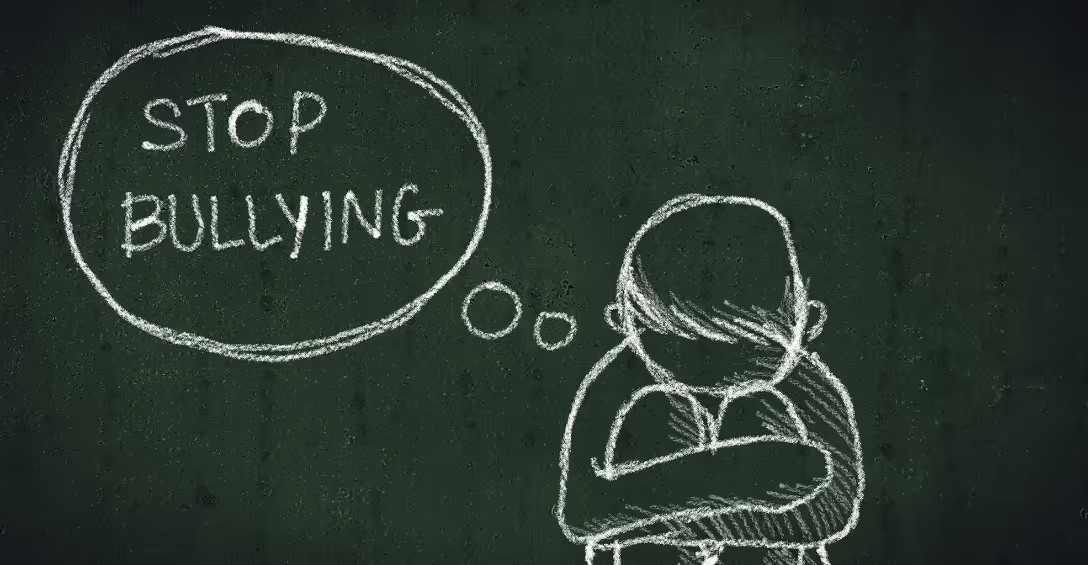
We do not tolerate bullying or any form of prejudice and will always aim to deal with any such incidents swiftly. We have clear procedures for dealing with incidents, and we educate students about their behaviour. We support events such as Anti-Bullying week.
How can we prevent bullying?
As school we have developed an effective anti bullying policy with input from teachers, supervisors and children. We have worked hard to promote a safe and welcoming environment and have helped children to take pride in their school. This has resulted in children's attitudes, behaviours and relationships improving and has had a positive impact on learning and achievement.
Staff are trained to recognise positive and supportive behaviour and will praise children on a regular basis. Our PSHE and RSHE curriculum are designed to develop empathy, emotional depth, resilience and intelligence. As part of our yearly curriculum we have an anti bullying week aimed at developing awareness and helping children to develop coping strategies.
Any Incidents or allegations of bullying are treated seriously and dealt with immediately by all members of staff.
We also use our Peer Mentors, Restorative Justice and reward systems to encourage positive behaviour within our school community.
Why is it so important to respond to bullying?
As a school we recognise that bullying in any form is unacceptable. Bullying hurts victims and can cause long term damage.
- Everybody has the right to feel safe and secure.
- Everybody has the right to be treated with respect.
- No one deserves to be a victim of bullying.
- Bullies need to be shown that their behaviour is unacceptable and shown different ways of behaving.
- Our school will respond promptly to any reported incident of bullying.
Who else can help?The following outside charities and organisations can help support your child with bullying issues.
Anti Bullying Alliance
Childline
thinkyouknow-esafety
NSPCC
What is bullying?
Bullying is behaviour which deliberately makes another person feel uncomfortable, distressed or threatened. It is often repeated over a period of weeks and months. Bullies attempt to make their victims feel intimidated and powerless to defend themselves.
Why are we against bullying?
At Lift Lea Forest we believe that every member of our academies community matters because we know that:
- Everyone regardless of their race, background or beliefs has the rights to feel welcome, secure, safe and happy.
- Everyone has the right to be treated with consideration and respect.
- We believe that bullying of any kind is unacceptable at our school and will work with children, teachers, parents and carers to prevent bullying.
- When bullying occurs we ask that children or parents report it to the school (class teacher or learning mentors) So that we can investigate and deal with any concerns quickly and effectively
- Our staff will always listen and it is important to tell a member of staff if you believe your child may be a victim of bullying. If you are unable to speak to your child's class teacher please contact the office (0121 675 3985) and ask to make an appointment to speak with our learning mentors.
What types of bullying are there?
Bullying occurs in many types and forms, it can be:
- Emotional (being unfriendly, deliberately excluding someone, tormenting, using threatening behaviour)
- Verbal (name calling, sarcasm, spreading rumors, teasing)
- Physical (pushing,kicking,hitting, punching, or any use of physical violence
- Extortion (demanding money, property, belongings using threats)
- Cyber (All areas of the internet, email and internet chat room misuse, Mobile threats by text, phone call or picture messaging, Misuse of associated technology.)
- Racial (Any comment, graffiti, gestures based around a racial stereotype or insult.) Sexual (Unwanted physical contact, sexually abusive comments.)
- Homophobic (Any comment, graffiti, gestures based around a stereotype or insult.)
What are the signs and symptoms of bullying?
Bullying affects different people in different ways and they may indicate signs or behaviours that show they are being bullied. Staff are trained to recognise these signs and will investigate and support a child if they believe their behaviour is as a result of bullying:
What causes bullying?
Our school council was asked in 2013 to identify the causes of bullying. They identified that people can bully for different reasons:
- To feel powerful or strong
- To make themselves feel good
- Jealousy Because they want something (attention,possessions, friends.)
- To be in control
- To look good in front of other people
- To feel popular
- As a result of peer pressure
Because the bully feels their victim is an easy target.
- To feel big or clever
- Because they are being bullied themselves.
If bullying is taking place, students are encouraged to:


.png)




















Lift Lea Forest,
Hurstcroft Road,
Kitts Green, Birmingham
B33 9RD

.png)